Beyond the Bubble Bath: Existential Self-Care for the Healthcare Professional
I've burned out more times than I would like to admit. I'm not proud of it, but I suppose such is the life of an entrepreneur, business owner, wellness practitioner.
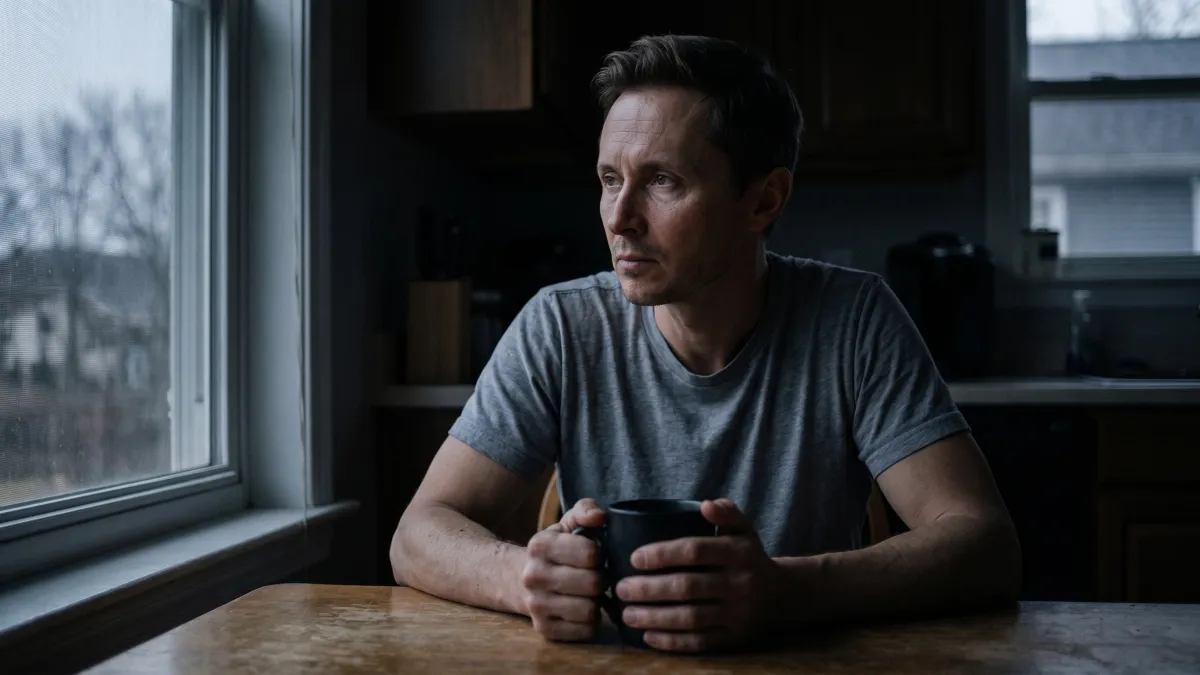
Or, that is what I told myself for years. Which might explain exactly why in early 2026 I hit the BIG wall. If what I had experienced before that was burnout, this time I wasn't just burnt. I was a crispy fried chicken wing that somehow fell under the basket of the air fryer and went through two full rounds. Thoroughly, irreversibly crispy.
This is a topic I could write about for hours, and I'm sure I will. But today I want to talk about the thing that sits at the root of it: what burnout actually is, and why most of the advice about it completely misses the point.
It wasn't until my most recent collapse that I stopped pretending I knew what was wrong and actually sat with it.
What I found wasn't pretty. Underneath the fatigue was a practitioner who had quietly stopped believing his work meant what he'd originally thought it did. The technique was still good. The outcomes were fine. But somewhere between the early years of genuine curiosity and the daily grind of a full clinical load, the thing that had actually animated the work had gone missing. And no amount of sleep was going to fix that.
I am not fully out of the woods, by the way. I think that's important to say. But I understand the problem now in a way I didn't when I was reaching for another vacation, another morning routine, another optimization strategy.
If you've found your way to this post, there's a decent chance you're somewhere on that same road. And if you're looking for a more structured way to work through it, the Selfcare and Burnout Prevention course is where I put everything I've learned about this the hard way.
The Self-Care Industry Has Sold Us a Comfortable Lie
Here's the thing nobody wants to say out loud: if bubble baths and sleep hygiene actually worked, burnout rates in healthcare wouldn't keep climbing. And look, I have nothing against a good pamper session. Hot baths, long walks, a decent night's sleep. All genuinely useful, genuinely restorative, 10 out of 10 would recommend. The problem isn't that these things don't help. The problem is that we've collectively decided they're the solution, and they're not.
In 2022, a study found that 46% of health workers in the United States reported feeling burned out often or very often, up from 32% just four years earlier. [1] Those numbers didn't go up because people stopped taking vacations. They went up because the standard advice is treating the wrong problem.
The dominant model of self-care in wellness culture is fundamentally a resource model. You're depleted, so refill. You're exhausted, so rest. You're overwhelmed, so simplify. And the implicit promise is that if you do those things consistently enough, you'll be okay.
That model is useful as far as it goes. Chronic sleep deprivation is genuinely harmful. Bodies need recovery time. None of that is wrong.
But it completely misses what Viktor Frankl identified decades ago and what more recent research has confirmed: burnout isn't only, or even primarily, a resource problem. A 2019 review in Frontiers in Psychiatry proposed that burnout is better understood as a form of "existential vacuum," Frankl's term for a state characterized by loss of life interest, collapse of initiative, and a deep sense of meaninglessness. [2] You can have all the rest in the world and still feel it. I did.
When Your Values and Your Work Come Apart
The research on what actually drives burnout is consistent in a way that should give every healthcare practitioner pause. Values misalignment, the gap between what a practitioner believes their work is for and what their daily reality actually demands, is one of the strongest predictors of burnout regardless of workload. [3]
For massage therapists and TCM practitioners, this gap is practically structural. You spend years training for clinical depth: orthopedic reasoning, assessment, genuine problem-solving. You enter practice and discover that the market mostly wants an hour of pressure and a scented room. You spend years acquiring a sophisticated clinical framework and then spend most of your career defending the basic legitimacy of what you do to people who think of it as a luxury.
The internal friction this creates is not just frustrating. Over time it becomes its own source of exhaustion, separate from the physical demands of the work. [4] And the insidious part is that it doesn't always announce itself clearly. It shows up as irritability. Cynicism toward cases you would have once found interesting. A low-grade resentment you can't quite justify. Emotional flatness. You're still technically doing the work. You've just stopped being present to it in any real way.
That's an existential problem. It doesn't respond to scheduling changes.
What the Frankl Framework Actually Offers
I want to stay with the Frankl piece for a moment because I think it's the most clinically useful frame I've found for understanding this.
Frankl's argument was that the primary human drive isn't pleasure or power, it's meaning. When meaning is present, people can tolerate extraordinary difficulty. When it's absent, even comfortable conditions become unbearable. His concept of existential vacuum describes what happens when that sense of meaning erodes: a person loses interest not because they're tired, but because nothing feels worth caring about anymore.
Frankl was fond of quoting Nietzsche on this point: "He who has a why to live can bear almost any how." It's a line that has stayed with me, and it cuts to the heart of why the resource model of self-care keeps failing people who are actually struggling. The how of recovery, the sleep, the routine, the time off, matters very little if the why has gone quiet.
Contemporary research has found consistent support for this in healthcare settings. A systematic review found that practitioners who experience their work as meaningful show significantly greater resilience to burnout, and that when meaning is absent, even manageable workloads become depleting. [5] That last part is worth reading twice. It means two practitioners with identical schedules can have completely different burnout trajectories depending on whether the work still means something to them.
You can refill a depleted tank. You cannot refill an existential vacuum with a hot bath.
Self-Compassion as a Practice, Not a Concept
One thing the research does support, which I've also found personally, is that self-compassion turns out to matter more than most practitioners expect. A 2023 study found that self-compassion scores were a significant negative predictor of burnout among mental health practitioners, independent of workload. [6] Higher self-compassion, lower burnout. The relationship held even when controlling for how busy people were.
This sounds soft until you understand what self-compassion actually means in clinical terms. It's not being easy on yourself. It's the capacity to meet your own suffering without reflexive judgment or self-criticism. For practitioners who are wired toward high standards and self-assessment, which, let's be honest, describes most of the people I know in this profession, that capacity is genuinely rare and genuinely difficult to develop.
I treated my first burnout as a personal failure. My second one too. Some part of me believed that if I were a better practitioner, a more disciplined person, a more together professional, I wouldn't have ended up here. Sitting with that belief and recognizing it for what it was, a story and not a fact, and a fairly punishing one at that, turned out to be more useful than anything else I tried.
The Deeper Work
The question underneath all of this is one most people don't want to ask because the answer might require something difficult: what do you actually value, and is your current practice life moving you toward that or away from it?
That's not a productivity question. It's not answered by optimizing your schedule. In Taoist thought there's a concept sometimes translated as wu wei: acting in alignment with your nature rather than constantly pushing against it. The practitioner who is perpetually in friction with the structure of their own professional life is burning energy on a kind of resistance that has no clinical resolution.
Getting clear on what actually animates the work for you, what you're really in this for, stripped of the should-haves and the market pressures and the regulatory noise, is slow, uncomfortable, and genuinely necessary. The practitioners I've seen sustain long careers have done this kind of reckoning at some point. Usually it wasn't voluntary.
Where to Go From Here
If this resonates, Man's Search for Meaning by Viktor Frankl is the place to start. It's short, it's old, and it will rearrange something in you.
For something more applied, the Selfcare and Burnout Prevention course covers both the physical recovery side and the internal psychological work that most burnout resources leave out entirely. It's 100% online, yours forever once you enroll, and approved for 1 CEC. It's not a quick fix, because there isn't one. But it's a serious attempt to address the actual problem.
And if the deeper question is about building a practice that doesn't keep producing this in the first place, Built to Last is the course I built specifically around values, alignment, and what it actually takes to construct a career worth sustaining.
References
[1] Centers for Disease Control and Prevention. (2023). Vital Signs: Health worker mental health. https://www.cdc.gov/vitalsigns/health-worker-mental-health/index.html
[2] Riethof, N., & Bob, P. (2019). Burnout syndrome and logotherapy: Logotherapy as useful conceptual framework for explanation and prevention of burnout. Frontiers in Psychiatry, 10, 382. https://doi.org/10.3389/fpsyt.2019.00382
[3] Olson Madden, K. (2026). Burnout and values misalignment. https://www.drolsonmadden.com/post/burnout-values-misalignment-denver [Please verify before publishing — therapist blog, not peer-reviewed. Consider replacing with a Maslach & Leiter source.]
[4] Burnout among healthcare workers: Insights for holistic well-being. Healthcare, 13(24), 3298. (2025). https://www.mdpi.com/2227-9032/13/24/3298
[5] Thir, M., & Batthyány, A. (2016). Systematic assessment of logotherapy research. Summarized in: Cerevity, Logotherapy: Frankl's guide to meaning. https://cerevity.com/logotherapy-meaning-centered-therapy-discovering-purpose-for-emotional-well-being/ [Please verify against original source before publishing.]
[6] Soffner, A., et al. (2023). Mindful self-compassion as an antidote to burnout for mental health practitioners. Healthcare, 11(20), 2715. https://pmc.ncbi.nlm.nih.gov/articles/PMC10606131/